Summary
Traffic: An Intersection of Time and Space explores how subtle disruptions to familiar environments can expose the social logics embedded within everyday pedestrian movement. Conducted in a high-traffic walkway defined by its incline, bifurcated flow, and unused semicircular gathering zones, the piece investigates how architecture and circulation patterns quietly choreograph human behavior. The experiment begins by foregrounding an ordinary action—standing still. Volunteers, indistinguishable from typical passersby, occupied the walkway for fifteen minutes without speaking or moving. This minimal shift in the environment immediately altered pedestrian behavior: individuals slowed, looked up, and attempted to interpret the disruption, projecting meanings ranging from political demonstration to memorial to flash mob. Their reactions revealed the expectations, assumptions, and social narratives that govern shared public space.
A second component extended the inquiry by arranging volunteers into predetermined configurations to deliberately obstruct and redirect pedestrian flow. By switching between blocking central lanes, then outer lanes, the performance temporarily restructured circulation and encouraged new patterns of interaction, including the unexpected use of the semicircular social areas normally bypassed. Through these orchestrated pauses and blockages, Traffic: An Intersection of Time and Space transforms the pedestrian walkway into a site of social observation, making visible the behavioral rhythms, collective adjustments, and latent possibilities of spaces we typically traverse without question.
Objectives
- Highlight a normal human action and draw attention to it
- Observe alterations in behavior due to factor mentioned above
- Identify trends in human behavior and their sources
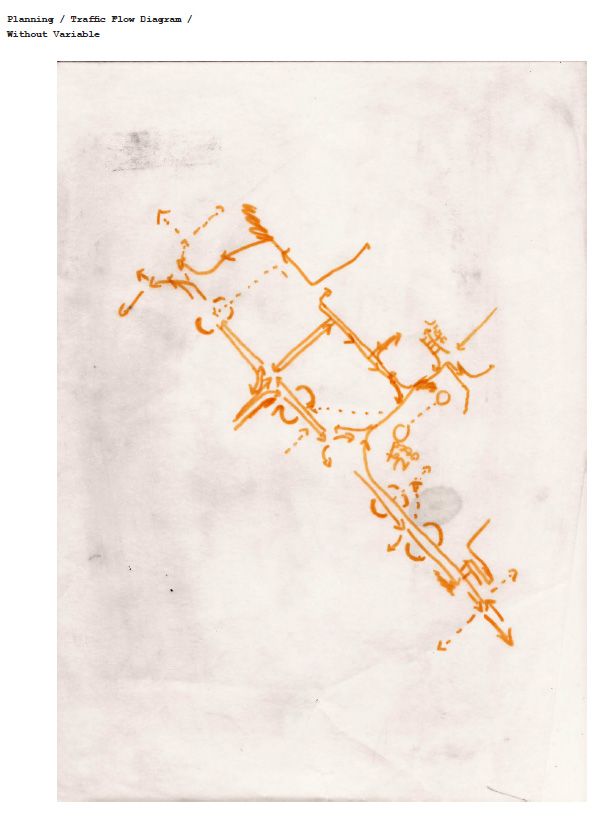
- Survey human traffic patterns
Observations
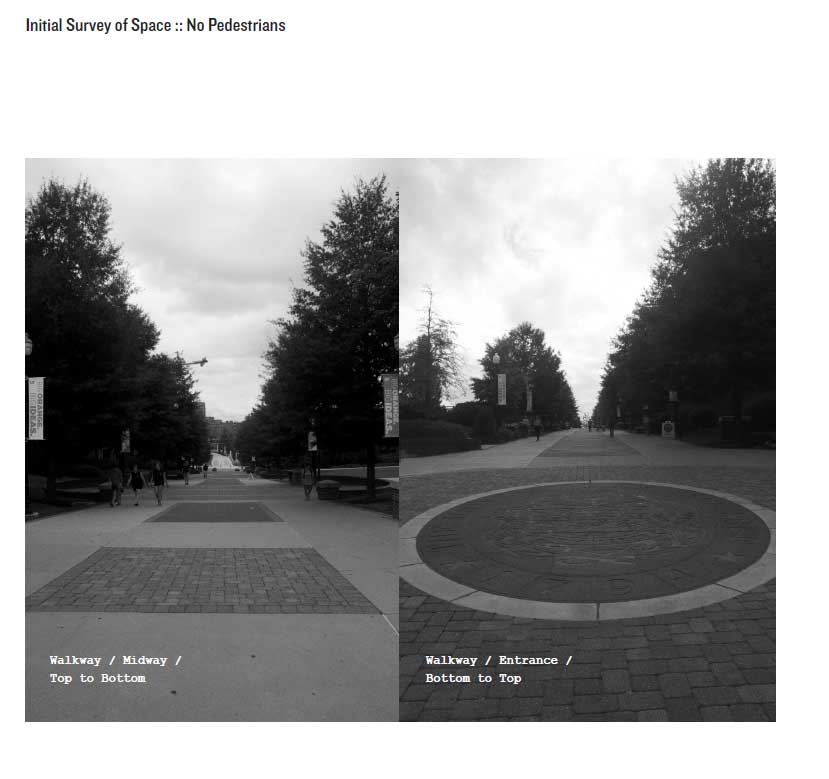
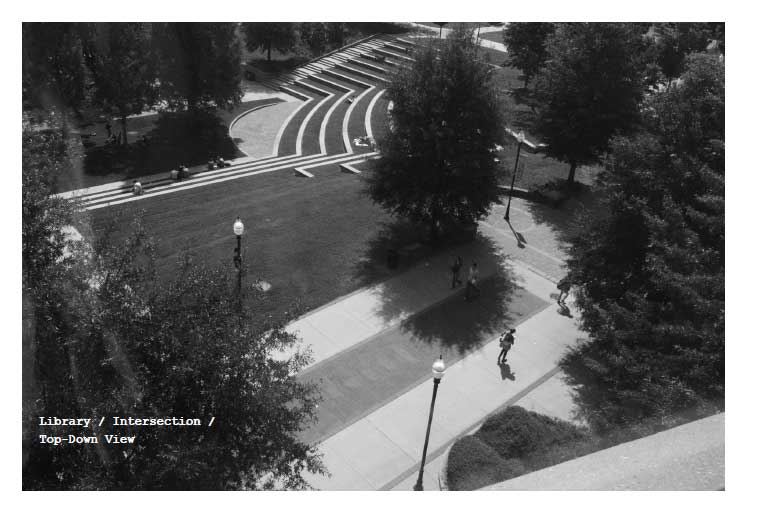
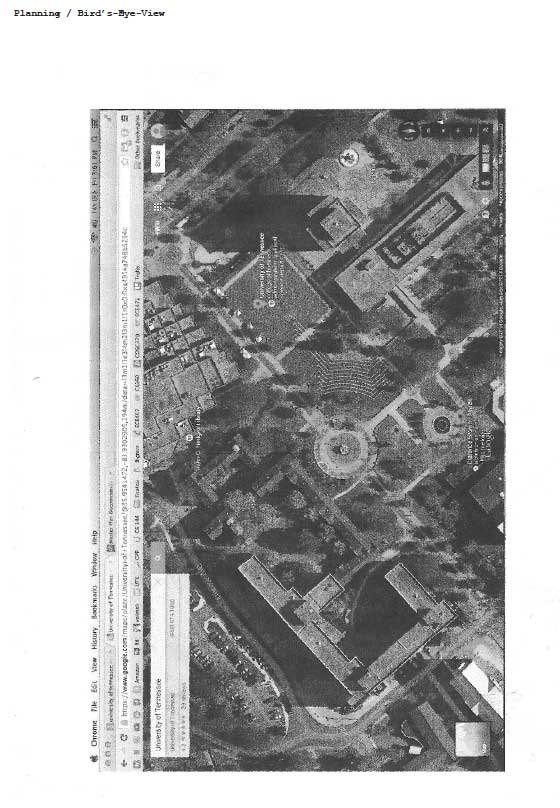
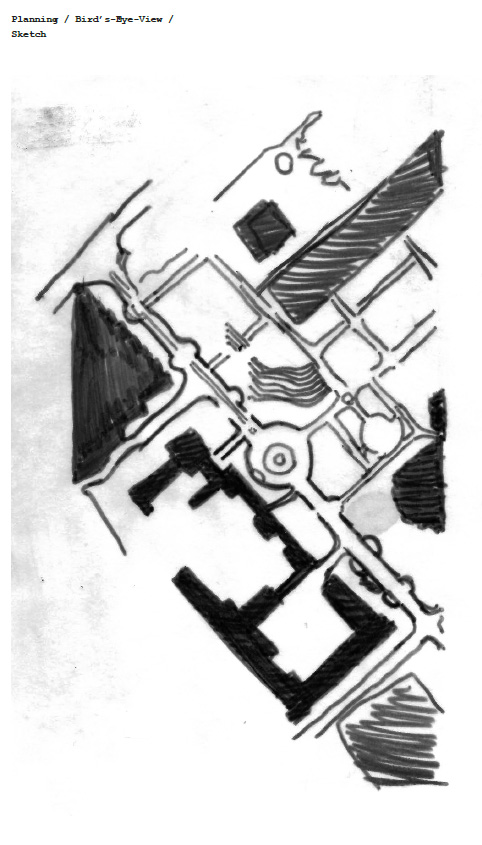
I am interested in observing human behavioral trends as well as what reactions occur when something in their normal environment changes. For this experiment, I have surveyed an area of high pedestrian traffic. What I noticed when I surveyed this space, is that due to its width and incline, it encourages little human to human interaction. More details that I picked up from the space are as follows:
- The pathway is split between an upward moving lane and a downward moving lane
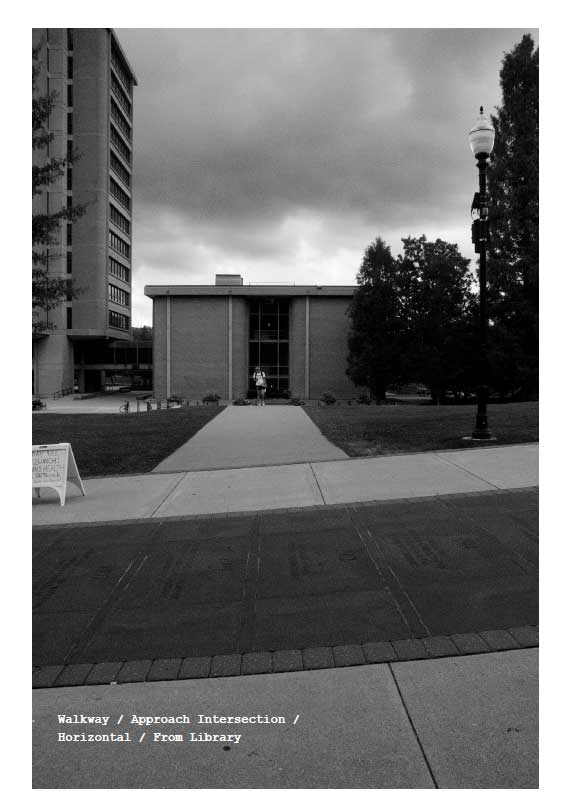
- This high flow of traffic interrupts the main points of intersection
- Semicircles have been placed throughout the space to encourage human to human interaction
- The semicircles are not used regularly for socializing purposes
- Semicircles may enforce the idea that the main pathway is busy and needs to be traversed quickly
- Most of the people who cross the walkway look down while walking
Methodology
There are two components to this experiment:
Component 1 :: The Art of Standing Still
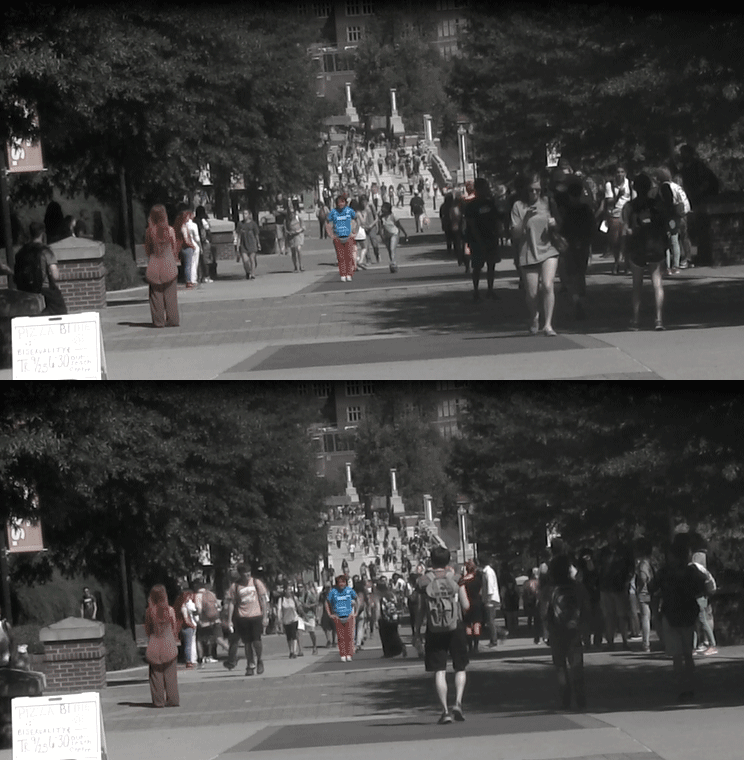
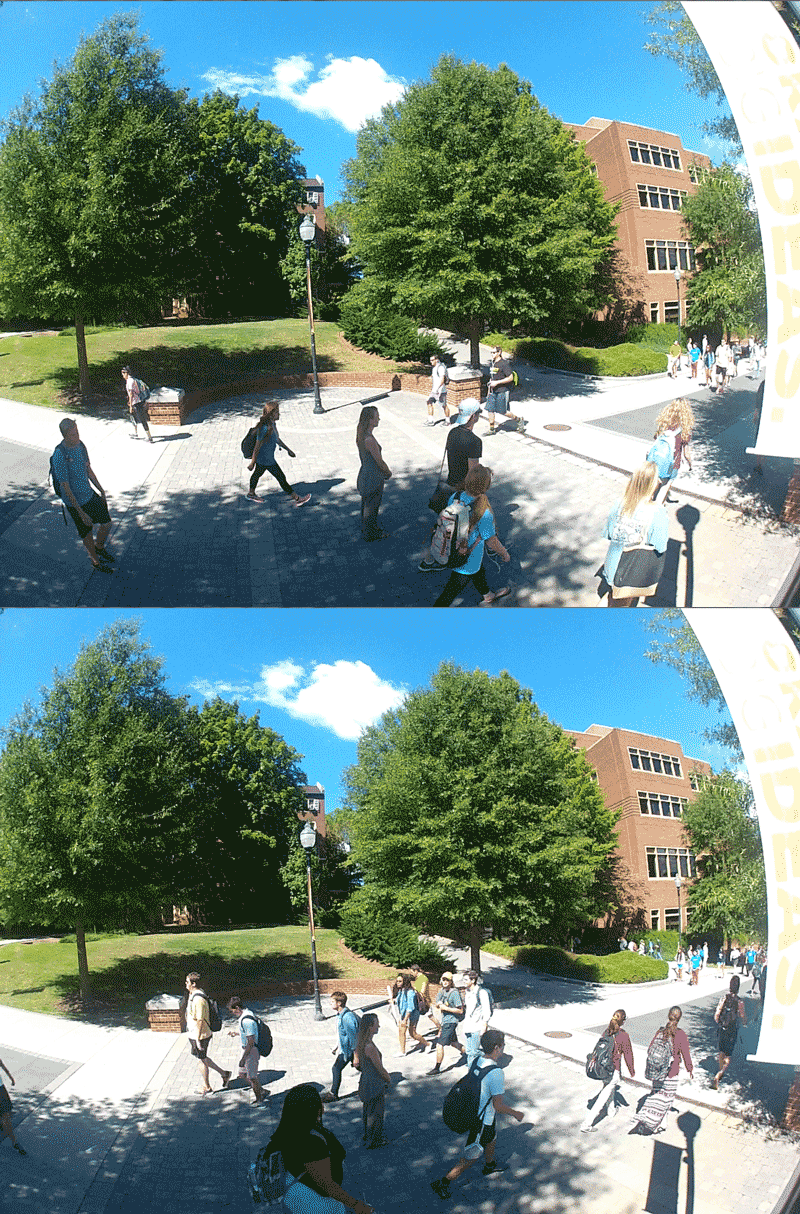
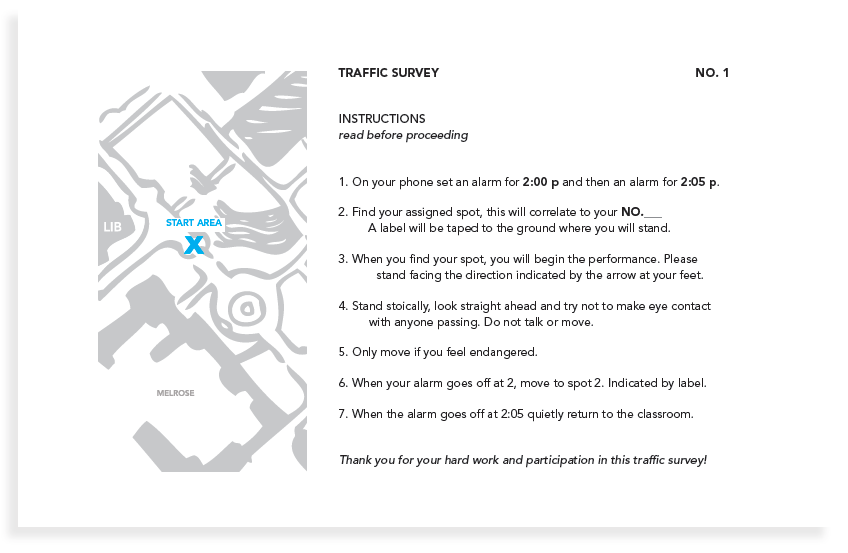
With my volunteers I highlighted a normal human action, the act of standing still. Although at first, this action seemed absolutely mundane and irrelevant, when done for 15 minutes in a high traffic area, it had quite the opposite effect. Those traversing the pedestrian walkway, quickly noticed the change in their normal environment. They each began to search through their own experiences to make sense of this change. In addition, they began to depend on each other to help make sense of the experience; grouping and discussing what they thought was happening. Some thought the act was a political demonstration, while others interpreted it as a flash mob ( a social trend that encourages vast coordinated action and utilizes social media ), others thought it was a memorial. Regardless of interpretation, the audience affected looked up and questioned the role the volunteers played in that space. They thereby, displayed an opinion and/or began to rethink their own opinion of what the correct role for that space should be.
Component 2 :: Pedestrian Traffic Survey
In doing this experiment I had my volunteers stand in pre-planned patterns. These patterns correlated to a query I had had on how blocking certain areas of the walkway would affect the overall flow of pedestrian traffic. The volunteers were placed at first to block the middle lane, thereby funneling traffic vertically to the 2 outer lanes. After a 5 minute mark, the volunteers moved to a second position. This position blocked the outer lanes and cleared horizontal traffic at the intersections by centralizing the the vertical flow. This position also encouraged the use of the semi-circular precepts of the space. What I found is that these “human gates” if you will, did serve to redirect traffic. At first, pedestrians did so without looking up or noticing, then by the 5 min mark pedestrians began to take notice of the oddity exhibiting behavior described above (see Component 1). What surprised me was the acceptance pedestrians had to the performance. Each component invoked questions and excitement as opposed to frustration or anger. Without an idea of the goal of the performance many pedestrians stayed to watch the pattern shifts and seemed to enjoy a communal “happening” that interrupted their day.
Constraints & Variables ::
- The place is constant
- Time of day must be consistent for 1 set of patterns
- Volunteers must not speak or interact with others
- Can test set of patterns in different locations and at different times
- Patterns can be still or can move
- Volunteers must blend in appearance with the public
- Duration of each performance will be 15min
Further Questions
Based on the behavior exhibited from both components 1 & 2, I’d be interested in:
- Exploring the communal affect this performance piece had. Perhaps I could conduct a piece where little is discussed about the goal but an invitation for passerby’s to join could implicitly built in. I wonder how many would join and what meaning the passerby’s themselves would then build into the performance.
- Exploring how non-human gateways would affect the flow. Going off of Component 2, gateways did redirect flow but many stopped to enjoy the performance and therefore not much could be gained on the traffic survey portion. I wonder how adding inanimate objects would affect the piece. Would passerby’s even notice the obstruction or would they instinctively redirect themselves? Would they alter the obstructions if the obstructions were easily manipulated (say traffic cones)?