Summary
352 Pathways is an artist book that documents the intellectual and emotional terrain of a designer’s junior year—a period shaped as much by experimentation and uncertainty as by formal instruction. Through the thematic clustering of archived project briefs, process artifacts, and reflective writing, the book traces a young designer’s pursuit of an ever-elusive ideal of “perfection.” Rather than presenting a linear account of project onset and solution, 352 Pathways examines how meaning emerges through the iteration, the tangents, the dead-ends, and the unlikely connections achieved through the exploration of the problem. It argues, that impactful creative work arises not from mastering techniques to produce a form, but from a sustained engagement with inquiry, ambiguity, and self-discovery.
Process
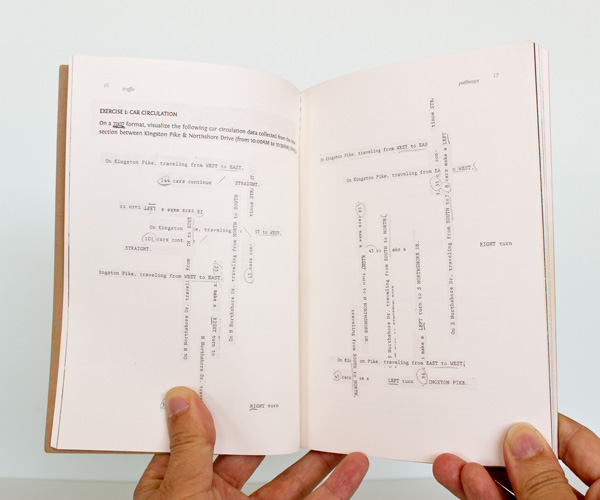
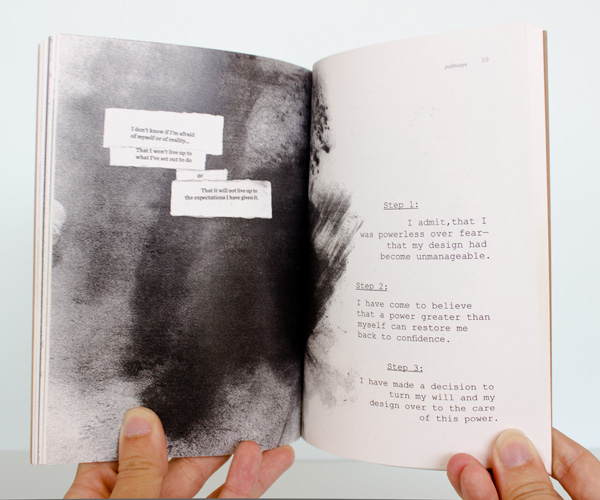
Across the academic year, I collected an expansive archive of materials that shaped my design thinking, including email exchanges, reading excerpts, visual experiments, found objects, and remnants of project work. Once digitized and printed, these fragments formed a working landscape through which patterns, tensions, and thematic clusters began to surface.
This process revealed an underlying set of questions that quietly structured the year: In design, is there such a thing as a perfect solution? If so, what criteria defines it? And if not, what motivates the pursuit of refinement within design’s creative practice? These questions became the conceptual spine of the work.
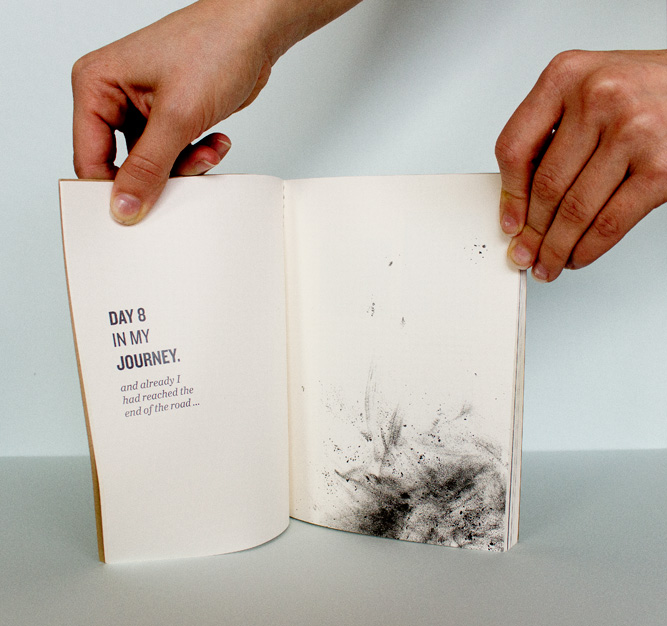
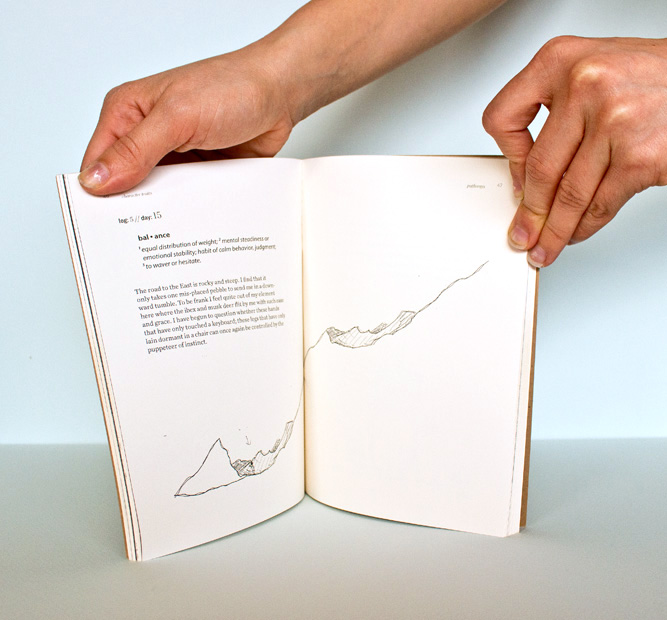
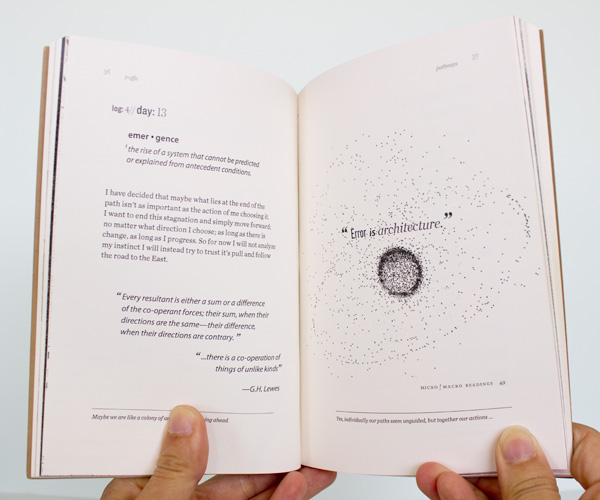
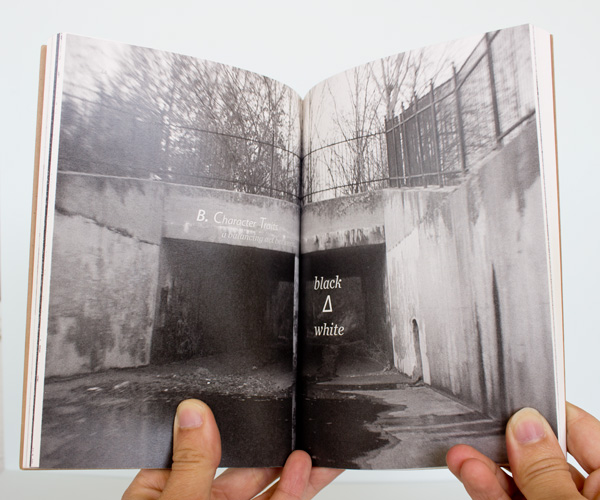
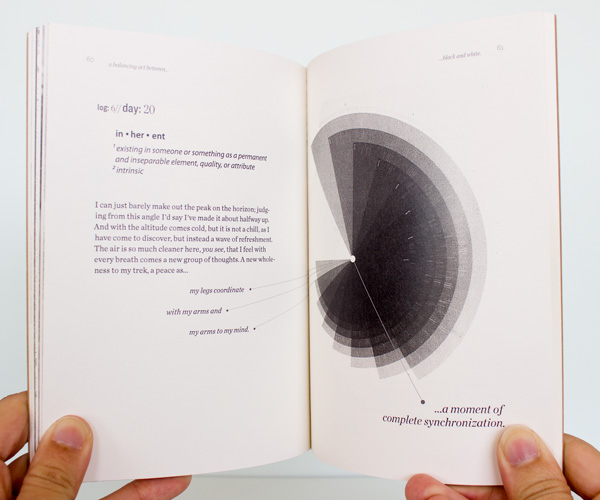
Guided by this inquiry, I designed the book as an immersive encounter with the nonlinear conditions of design itself. Rather than presenting a polished sequence from A to B, 352 Pathways foregrounds the productive disorder of the creative process—its recursive loops, moments of insight, and unlikely influences. As readers move through the book, they encounter two narrative threads: a present-day account that mirrors the questions shaping the designer’s year, and a parallel fictional narrative following a field researcher studying the flora and fauna of a mountain range. The first grounds the book in the lived realities of student life; the second offers an allegory that critiques linear expectations of “finding the right answer” and draws implicit connections between artistic and scientific modes of inquiry.
These narrative threads begin as distinctly separate in voice, time, and place, then gradually weave together, culminating in a resolution that acknowledges not the arrival at perfection, but a recognition of what animates one’s creative drive.